Print #7 — Gridfinity: when 3d printing becomes a system
Until now, you've printed single objects. Print #7 is different: it's your entry into an *ecosystem*.
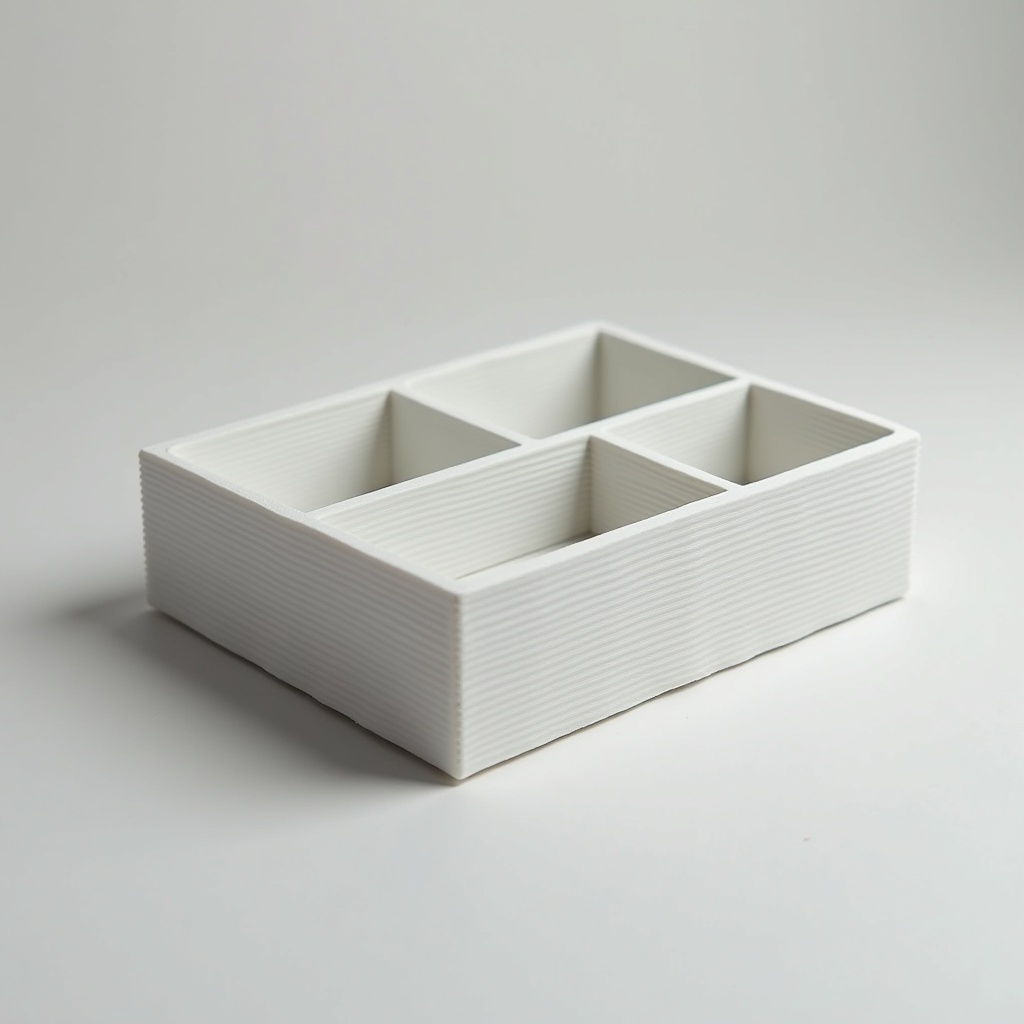
Until now, you've printed single objects. Print #7 is different: it's your entry into an ecosystem.
Gridfinity is an open-source modular storage system created by Zack Freedman and adopted by hundreds of thousands of makers worldwide. The concept is simple: a standardized grid base (42×42mm units) onto which any compatible bin, holder, or tray snaps perfectly into place.
What makes it remarkable is the community. Thousands of Gridfinity-compatible designs exist on Printables — bins for screws, holders for pens, trays for SD cards, racks for drill bits. You print the base once. Then you fill it forever.
How it works:
The baseplate:
A flat grid with magnetic receptacles (or just friction holes) at every 42mm interval. Print one sized to your drawer or desk. This is your foundation — print it once, forget it.
The bins:
Any Gridfinity-compatible container that slots into the base. They're measured in "units" — a 1×2 bin occupies 1×2 grid squares (42×84mm). Print as many as you need, rearrange anytime.
The magic:
Every Gridfinity bin from any designer snaps into every Gridfinity base from any other designer. It's a community-maintained standard. Once you print your first base, you're locked into an infinitely expandable system.
What to print first:
1. Start with a 2×4 baseplate (small enough to test, big enough to be useful)
2. Print 3–4 basic bins in sizes that fit your actual drawer
3. Add specialized bins later (bit holder, SD card slot, whatever you need)
Recommended settings:
- Layer height: 0.2mm
- Infill: 15% for bins, 20% for baseplates
- No supports
- Brim optional (bins are small enough to not need it)
Print time planning:
A full drawer organizer might be 10–15 individual prints. That's hours of total print time — but each piece is under an hour. Run them overnight. Within a week, your workshop is transformed.
What can go wrong:
- *Bins don't snap in firmly:* check that your cube calibration was accurate. Gridfinity has tight tolerances.
- *Baseplate warps:* add a brim, lower print speed for first layer.
- *Looking for a specific bin that doesn't exist:* check Thangs.com (multi-platform search) or design your own in Tinkercad — Gridfinity dimensions are fully documented.
Why this print matters:
Gridfinity teaches you that 3D printing is not about single objects — it's about systems. The community has done the design work. Your job is to print, assemble, and customize. This is the most addictive aspect of the hobby.
Ready to layer up? → Print #8: Cable Clips: The Art of Printing in Batches