Print #10 — The wall hook: when infill finally matters
For the last nine prints, the difference between 15% and 40% infill was mostly theoretical. The pencil cup didn't care. The coaster didn't care. The cable clips barely noticed.
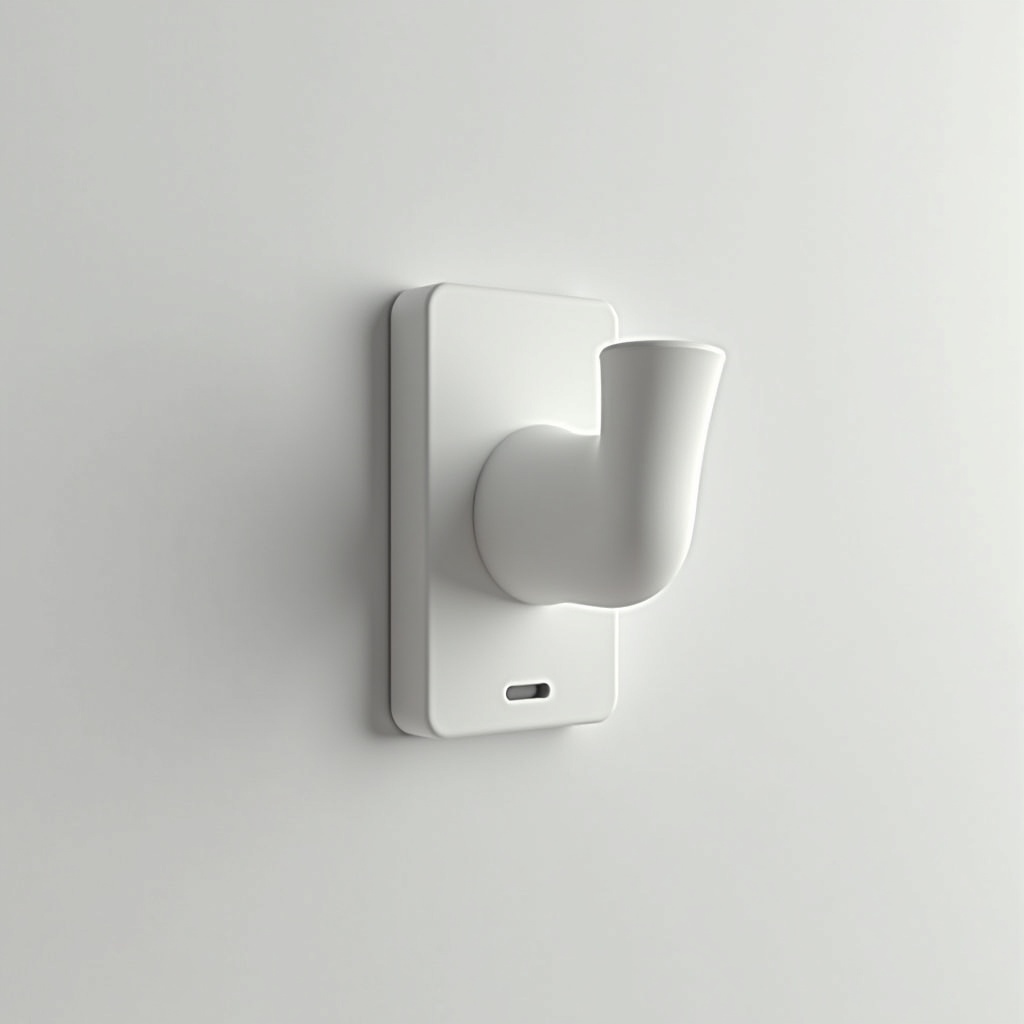
For the last nine prints, the difference between 15% and 40% infill was mostly theoretical. The pencil cup didn't care. The coaster didn't care. The cable clips barely noticed.
The wall hook cares.
This is your first print where infill percentage directly determines whether your object survives or snaps. Welcome to load-bearing 3D printing.
Why wall hooks are a different class of print:
A hook loaded with a jacket, bag, or set of keys experiences two types of stress:
- Tensile stress on the hook curve (pulling outward)
- Shear stress at the wall mount point (pulling downward)
PLA handles compressive load well but is brittle under impact and tension. This means your settings need to compensate.
The infill-strength relationship:
CNC Kitchen (Stefan) has run exhaustive mechanical tests on 3D printed parts. Key findings:
- Below 20% infill: structure is largely walls, infill barely matters
- 20–40%: significant strength increase per percent
- Above 40%: diminishing returns — walls become the limiting factor
- 4 perimeters + 40% infill is the sweet spot for load-bearing parts
Wall thickness matters more than infill:
For a wall hook, increase perimeters to 4 (or even 5). The outer walls carry most of the shear load. A hook with 4 walls and 20% infill is stronger than one with 2 walls and 60% infill.
Mounting options (from weakest to strongest):
1. 3M Command strips: easy, removable, no holes. Rated for 1–4kg depending on strip size. Good for lightweight items.
2. Double-sided tape + wall anchor: medium strength. Add a mounting hole to the model.
3. Wall screw: drill a pilot hole, use a wall anchor, screw directly through the printed hook. The strongest option. Can hold 5–10kg.
Material choice:
- PLA: fine for light loads (keys, small bag). Not recommended for constant heavy loads in warm environments (car garage, summer sun).
- PETG: better impact resistance, slightly more flexible. A better default for hooks.
Recommended settings:
- Layer height: 0.2mm
- Infill: 40% (minimum for load-bearing)
- Walls: 4 perimeters
- Top/bottom layers: 5
- Print orientation: hook base flat on bed (maximum layer adhesion at the stress point)
What can go wrong:
- *Hook snaps at curve:* not enough infill or walls — increase both. Also check print orientation (layer lines perpendicular to stress = weaker).
- *Hook pulls away from wall:* adhesive strip failed — upgrade to screw mount.
- *Surface rough where support was:* sand with 220-grit or use a model designed to print support-free.
Orientation is everything:
Print the hook with its flat back face-down. This means the layers run horizontally across the hook — perpendicular to the downward pull. Layers parallel to the load direction are much weaker (like cutting along wood grain vs. across it).
Why this print matters:
The wall hook closes Level 2 with a fundamental engineering lesson: for structural parts, settings are not interchangeable. 40% infill, 4 walls, correct orientation — these aren't just numbers. They're the difference between a hook that lasts years and one that fails the first week.