Level 4
Print #21 — TPU bracelet or ring: your first flexible print
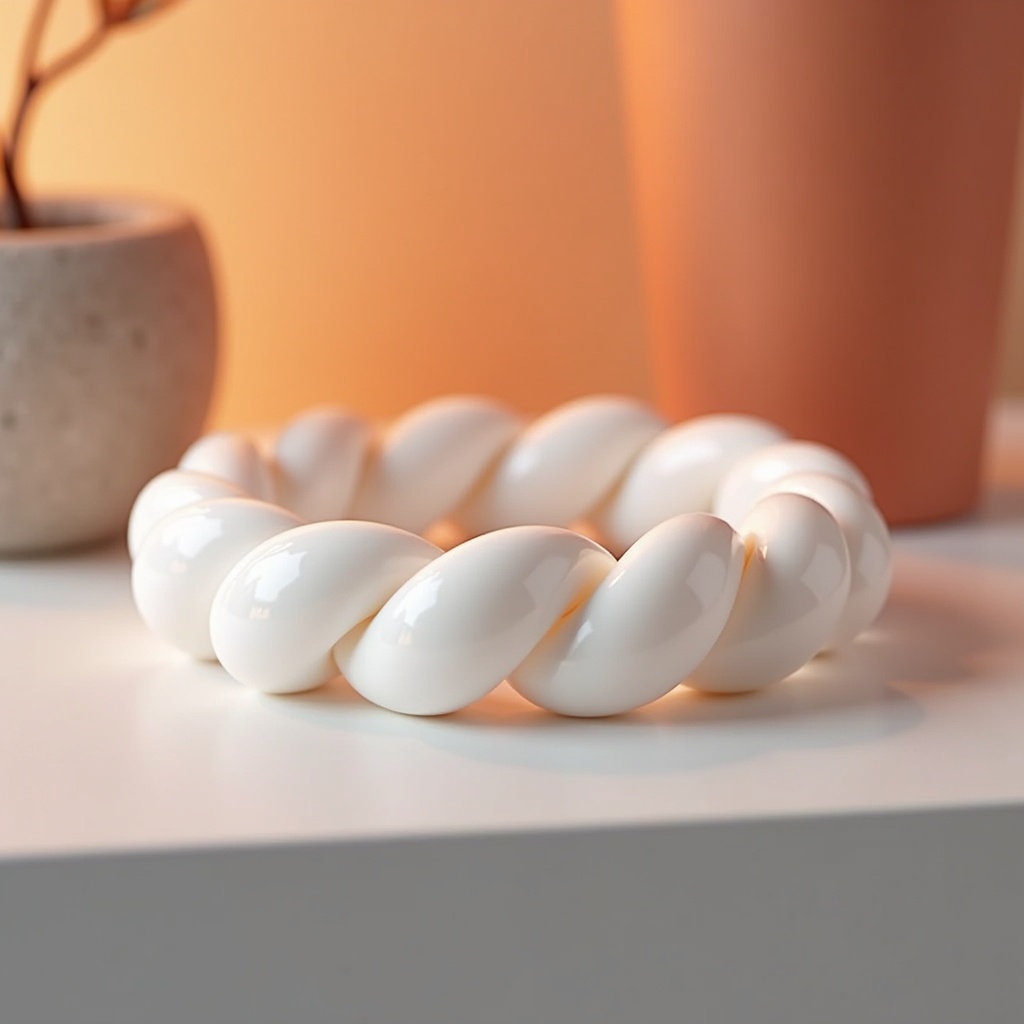
Most 3D prints are rock hard. But your printer can also make things that squish, stretch, and bend. This project is your gateway to the world of TPU (Thermoplastic Polyurethane).
TPU is notorious for being "difficult," but it's actually just misunderstood. It's like trying to push a wet noodle through a straw. If you go too fast, it tangles. If you retract too much, it jams. By printing a simple bracelet or ring in vase mode, you'll learn exactly how this material behaves without the complexity of supports or infill.
The Concept: Vase Mode & Flexibility Vase mode (or "Spiralize Outer Contour") prints the entire object in one continuous movement. This is perfect for TPU because it eliminates "retractions"—the moments where the printer stops extruding to move, which is where most TPU jams happen. You'll see how a single wall of flexible plastic can be surprisingly strong and wearable.
Recommended Settings: - Material: TPU (95A is the easiest for beginners) - Layer height: 0.2mm - Vase Mode: Enabled - Speed: 20-25mm/s (Slow is smooth, smooth is fast) - Retraction: Disabled (or very low, ~1mm) - Temperature: 230°C (Hotter helps flow)
What can go wrong: 1. The "Noodle Jam": The filament tangles in the extruder. Fix: Slow down even more. Check that your extruder isn't too tight. 2. Poor Adhesion: TPU sticks *too* well to some surfaces (like PEI). Fix: Use a glue stick as a release agent so you don't tear your bed. 3. Blobbing: Plastic oozes out. Fix: Increase temperature slightly or dry your filament (TPU absorbs moisture like a sponge).
Why this print matters: Mastering flexible materials changes how you think about 3D printing. It's no longer just about plastic toys; it's about gaskets, tires, wearable tech, and vibration dampeners. You’ve just added a new dimension to your maker toolkit.
Ready to layer up? → Print #22